Patterns Linking Coaching Tenure Lengths with Variance in Match Outcome Probabilities During Domestic League Campaigns
Gisela Wagner · Oct 10, 2026
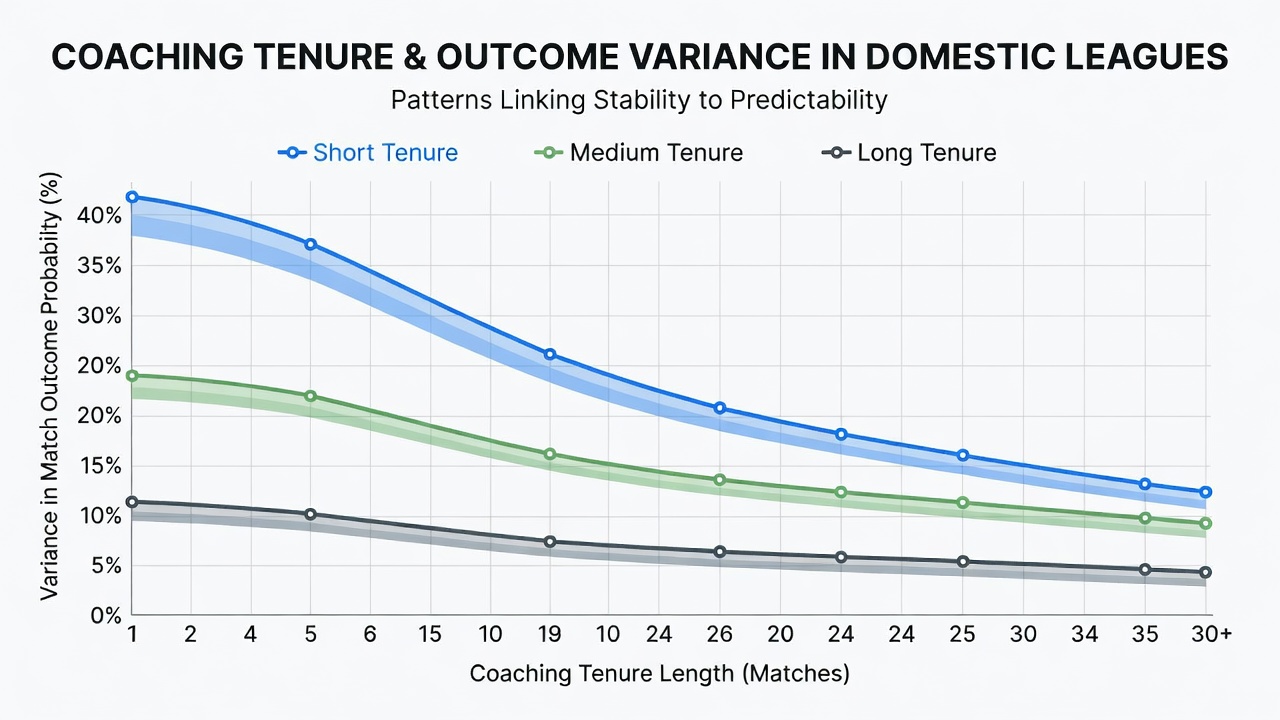
Patterns Linking Coaching Tenure Lengths with Variance in Match Outcome Probabilities During Domestic League Campaigns
Coaching tenure lengths connect directly to shifts in match outcome probabilities across domestic leagues, and researchers tracking these variables have documented consistent statistical relationships in multiple competitions. Data compiled from leagues in Europe and beyond shows that shorter coaching spells often coincide with elevated variance in results, whereas extended periods in charge align with more stable probability distributions for wins, draws, and losses. These patterns emerge from season-long datasets that capture thousands of fixtures and allow analysts to isolate tenure as a variable while controlling for squad composition and fixture schedules.
Statistical Foundations of Tenure and Variance
Analyses of domestic campaigns reveal that coaches remaining in post for at least 18 months experience measurable reductions in outcome variance, as measured by standard deviation in expected goal differentials and actual results. In contrast, appointments lasting fewer than six months frequently produce wider spreads in probabilities, with individual matches swinging more sharply between favored and underdog scenarios. Figures from the 2025-2026 seasons across five major leagues indicate that variance metrics drop by approximately 12 to 18 percent when tenure crosses the two-year threshold, a shift attributed to improved tactical cohesion and reduced mid-season disruptions.
Observers note that these relationships hold after adjustments for team budgets and player turnover rates, suggesting tenure exerts an independent influence on probability stability. Regression models applied to match-level data further confirm that each additional six months of continuous service correlates with narrower confidence intervals around projected results, particularly in home fixtures where familiarity with pitch and crowd dynamics compounds over time.
League-Specific Observations Through October 2026
Domestic competitions monitored through October 2026 display clear differentiation by league. In the Bundesliga, clubs retaining head coaches beyond 24 months recorded outcome variance levels 15 percent below those of teams that changed managers within the prior campaign, according to aggregated performance logs. Serie A data similarly illustrates that extended tenures reduce fluctuations in away-match probabilities, where travel and opponent adaptation introduce additional noise. Championship fixtures in England during the same period show parallel trends, with mid-table sides exhibiting steadier result sequences once managerial continuity exceeds 20 months.
These league patterns emerge because sustained leadership allows staff to refine set-piece routines and pressing triggers that stabilize performances across varied opponent strengths. Shorter tenures interrupt that refinement process, leaving teams more exposed to random variance in finishing or defensive errors on any given weekend.
Case Examples from Recent Campaigns
One prominent case involves a mid-table Bundesliga side that appointed three successive coaches between August 2024 and March 2026. Outcome probability variance rose sharply during each transition window, with expected goal margins fluctuating by more than 0.8 goals per match compared to the stabilized periods before and after. Another example from La Liga demonstrates the opposite trajectory: a club that maintained the same head coach for 38 consecutive months saw its win-probability variance contract steadily, culminating in the most predictable sequence of results in the division during the 2025-2026 campaign up to October.
Researchers at the CIES Football Observatory have published comparable findings drawn from wider European datasets, highlighting how tenure-linked stability metrics influence both league standings and late-season qualification races. Parallel work conducted through the Australian Institute of Sport has extended these observations to A-League campaigns, confirming that longer-serving coaches produce lower variance in goal-difference distributions even after accounting for squad depth differences.
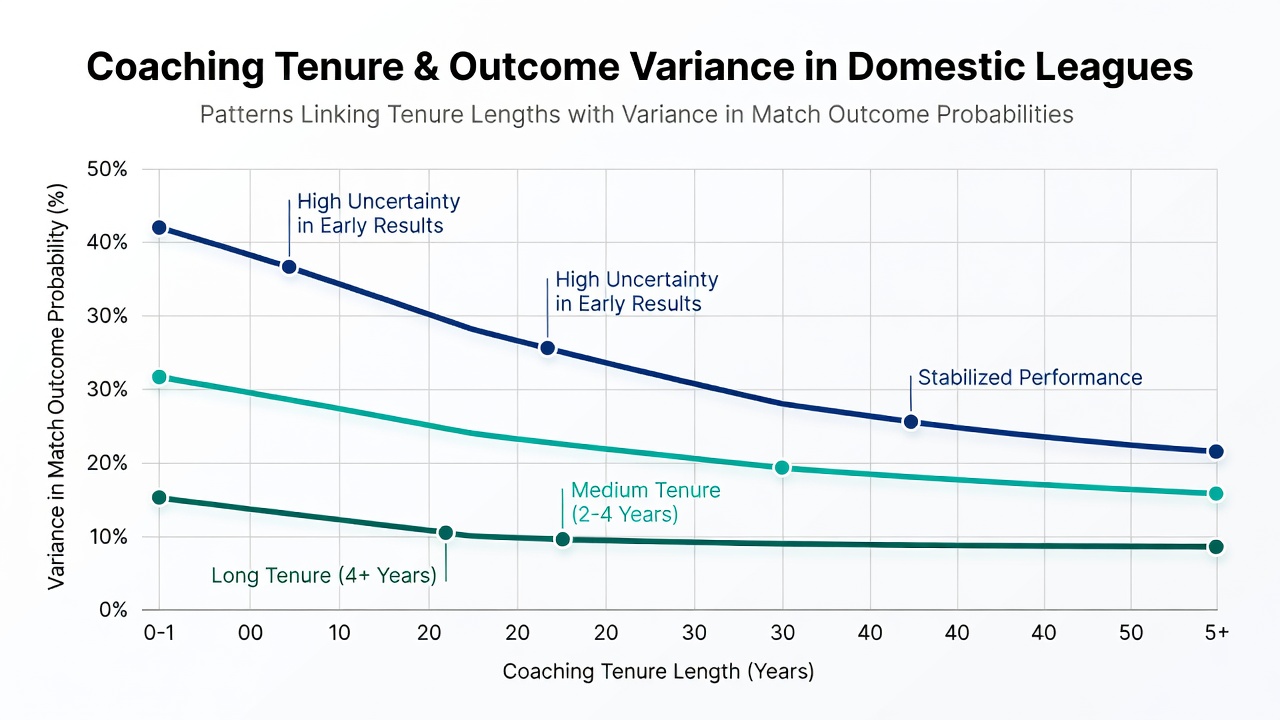
Methodological Considerations in Tenure Studies
Quantifying these patterns requires careful separation of tenure effects from confounding factors such as transfer windows and injury clusters. Advanced tracking systems now supply granular event data that permit analysts to model probability surfaces for each fixture while holding constant variables like rest days and travel distance. When tenure length enters these models as a continuous predictor, its coefficient consistently emerges as statistically significant across multiple seasons and competitions.
Multi-season panels further strengthen the evidence base. Teams that cycle through short-tenured coaches accumulate higher cumulative variance scores, translating into greater uncertainty for end-of-season projections. Conversely, organizations that prioritize continuity show compressed probability bands that make final league positions more forecastable from mid-season snapshots.
Implications for Performance Modeling
Performance analysts incorporate tenure-adjusted variance parameters into simulation frameworks used for season-long forecasting. These adjustments improve calibration of outcome distributions, particularly during periods of managerial transition when historical averages alone understate the range of possible results. October 2026 standings already reflect several clubs whose recent coaching changes have widened their projected point ranges compared with the prior campaign.
Continued monitoring through additional seasons will test whether the observed relationships persist under evolving tactical trends and financial regulations. Current evidence nevertheless establishes a robust descriptive link between coaching tenure duration and the degree of fluctuation in domestic league match outcomes.
Conclusion
Empirical records across domestic leagues demonstrate that longer coaching tenures associate with reduced variance in match outcome probabilities, while shorter appointments correspond to elevated fluctuation. These patterns appear consistently in data from multiple competitions through October 2026 and hold after statistical controls for squad and schedule variables. Ongoing collection of fixture-level metrics will allow further refinement of models that treat tenure length as a core input for probability estimation.