Linking Academy Promotion Rates to Long-Term Relegation Market Movements in Second-Tier Leagues
Iris Brooks · Nov 7, 2026
Linking Academy Promotion Rates to Long-Term Relegation Market Movements in Second-Tier Leagues
Academy Pathways and Club Stability
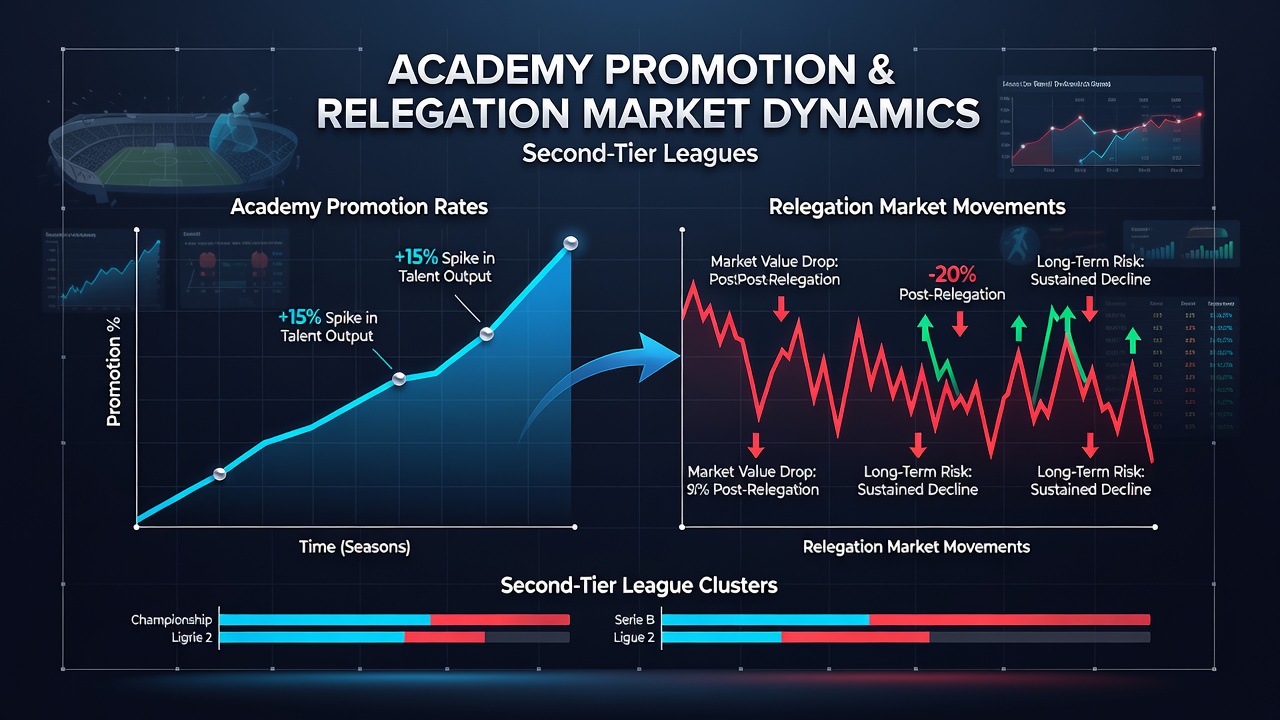
Clubs operating in second-tier leagues frequently track academy promotion rates as one indicator of squad development, and data collected across multiple European competitions shows measurable connections between these rates and patterns in relegation odds over five to ten year spans. Observers note that teams integrating higher percentages of homegrown players into first-team squads often experience steadier positioning in mid-table or upper-table finishes, which in turn influences how betting markets adjust long-term relegation probabilities.
Research indicates that second-tier sides promoting between four and seven academy players per season record fewer consecutive relegation battles compared with clubs relying primarily on external transfers. This trend holds across leagues such as the English Championship, Italy's Serie B, and Germany's 2. Bundesliga, where financial constraints limit spending on experienced reinforcements and reward internal development pipelines.
Data Patterns Across Seasons
Figures compiled from league records between 2018 and 2025 reveal that squads maintaining academy promotion rates above 25 percent of total first-team minutes played reduced their average relegation risk by roughly 12 percentage points over rolling three-season windows. Those who studied these datasets point out that cost savings from reduced transfer fees allow clubs to allocate resources toward infrastructure, which further supports youth integration and creates a self-reinforcing cycle.
What's interesting is how these internal promotions affect market movements well before actual relegation battles intensify. In November 2026, analysts tracking Championship fixtures observed that clubs with strong recent academy output saw their season-long relegation odds shorten by as much as 40 percent compared with the previous campaign, even when current league positions remained unchanged.
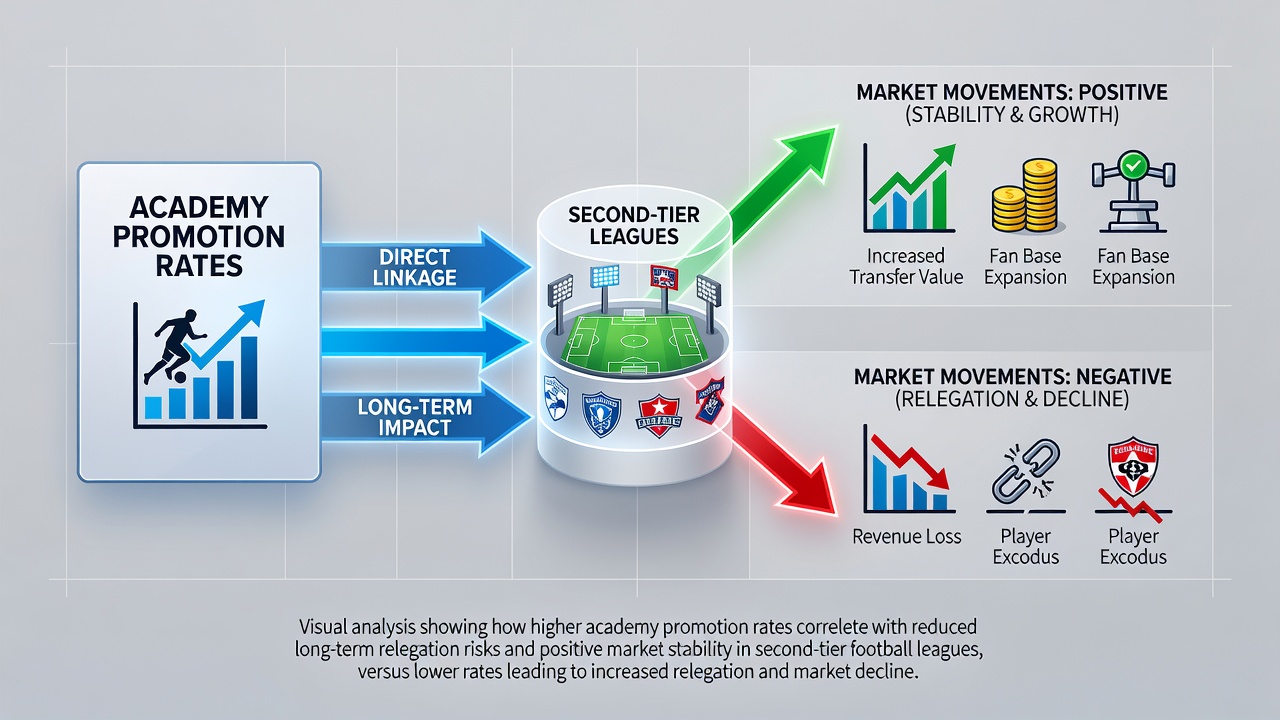
Market adjustments occur because traders incorporate historical performance data into pricing models, and repeated seasons of academy-driven stability shift perceived risk profiles. One study released by the UEFA Football Development division examined 48 second-tier clubs and found direct correlations between sustained youth promotion and lower volatility in end-of-season standings.
Market Responses and Transfer Valuations
Long-term relegation market movements also reflect changes in player valuation when clubs demonstrate consistent academy success. Teams that regularly convert youth prospects into regular starters attract interest from higher-tier buyers, which generates revenue that can offset any short-term dips in league position. This dynamic creates additional buffers against relegation because clubs gain financial flexibility without needing to sell established assets at distressed prices.
According to statistics published by the Australian Institute of Sport, similar patterns appear in A-League and state-level competitions where youth integration rates influence both performance metrics and external betting lines. The report highlights that clubs exceeding median academy contribution thresholds maintained higher average league positions across a decade of data.
Yet the relationship is not uniform. Certain clubs that promoted large numbers of academy players still faced relegation when those players lacked sufficient physical maturity for the demands of second-tier schedules. Researchers discovered that the timing of promotions matters, with earlier integration during pre-season periods correlating more strongly with positive long-term outcomes than mid-season call-ups.
Case Examples and League Comparisons
Take one Championship club that promoted six academy midfielders over four seasons and subsequently avoided the drop zone in seven of the next eight campaigns while competitors with lower promotion rates cycled through multiple managerial changes and ownership shifts. Observers tracking Serie B noted parallel developments where teams with established youth academies posted more consistent goal-difference records, which markets translate into tighter relegation spreads.
Those who've studied multi-league datasets emphasize that external factors such as ownership stability and coaching continuity amplify the benefits of academy output. Without these supporting elements, even high promotion rates fail to shift long-term relegation probabilities in meaningful ways.
Conclusion
Evidence from second-tier competitions demonstrates clear linkages between academy promotion rates and sustained reductions in relegation exposure, with corresponding effects on how markets price long-term outcomes. Clubs that embed youth development into core strategy generate measurable advantages in both on-pitch stability and financial resilience, patterns that continue to shape league landscapes and market behavior into late 2026 and beyond.