How Fixture Congestion Periods Reshape Statistical Trends in Championship Contests
Gisela Wagner · Aug 21, 2026
How Fixture Congestion Periods Reshape Statistical Trends in Championship Contests
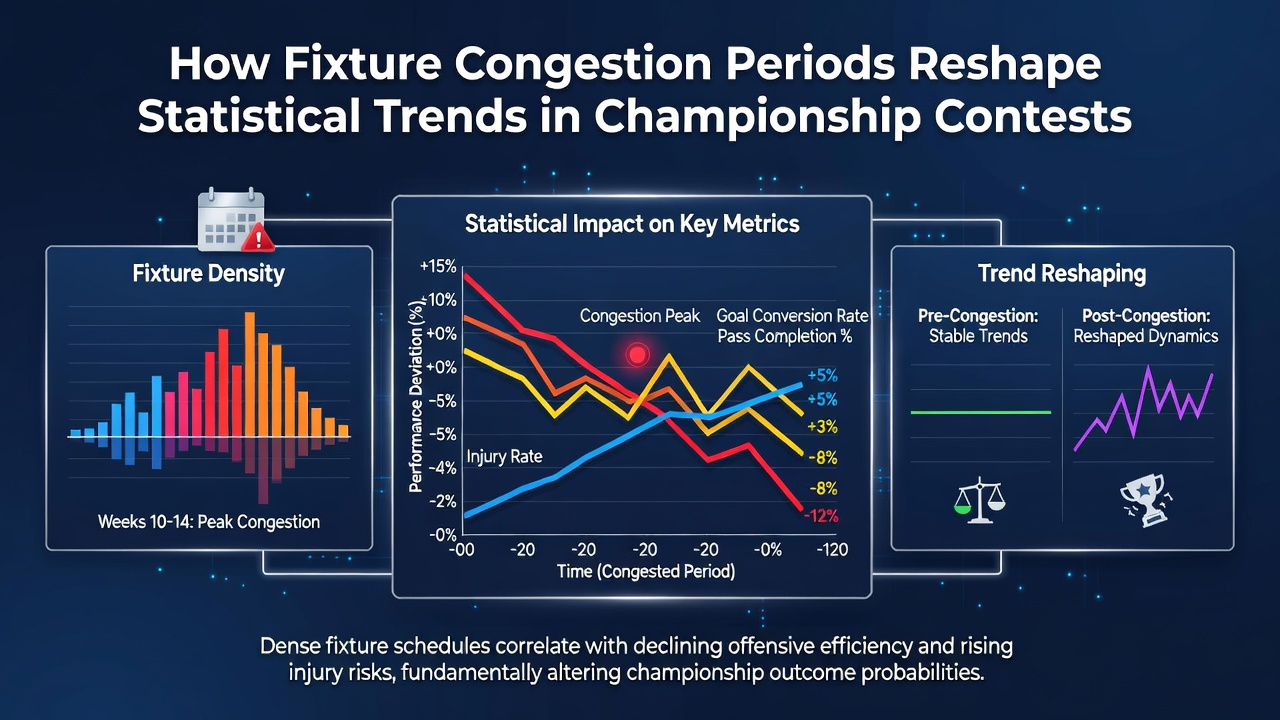
Fixture congestion emerges when teams in the Championship face multiple matches within short timeframes, often due to league scheduling, cup competitions, and international breaks, and data from recent seasons shows clear shifts in key performance metrics during these stretches. Researchers tracking the EFL Championship have noted that matches pile up particularly in December and around Easter, while August 2026 schedules already signal early-season pressure points for promoted sides adjusting to the demands of the second tier. Studies examining match data indicate that player workload increases sharply, which in turn alters patterns around goals scored, conceded, and overall match outcomes across the division.
Player Workload and Injury Patterns During Congested Periods
Medical tracking systems used by Championship clubs reveal higher rates of soft tissue injuries when teams play three matches in seven days or more, with hamstring and calf issues rising by measurable margins according to figures compiled by sports science teams. Observers note that recovery windows shrink dramatically, so teams that rotate squads effectively tend to maintain defensive structures better than those relying on the same starting eleven repeatedly. Data compiled across multiple seasons shows that midfielders and full backs accumulate the most minutes in these windows, leading to measurable drops in sprint distance covered per 90 minutes after the third consecutive game. One analysis of 2024-25 fixtures found that clubs averaging over 2.8 matches per week recorded injury-related absences that climbed steadily through the congested block, reshaping squad availability lists for subsequent rounds.
Goal Scoring and Defensive Metrics Under Pressure
Statistical reviews of Championship contests during congestion periods demonstrate a consistent uptick in goals per game, with league-wide averages climbing from 2.6 to around 2.9 during peak fixture clusters. Teams playing their third match in eight days tend to concede more from set pieces and transitions because defensive organisation frays when legs tire, while attacking output sometimes increases due to more open play. Figures released by performance analytics platforms indicate that clean sheet percentages drop noticeably for sides involved in double gameweeks, whereas promoted teams adjusting to the intensity often see their expected goals against rise faster than established clubs. Those who've examined match logs across several seasons point out that late-game goals become more frequent as fatigue sets in, shifting the distribution of scoring times toward the final 15 minutes.
Home and Away Performance Shifts
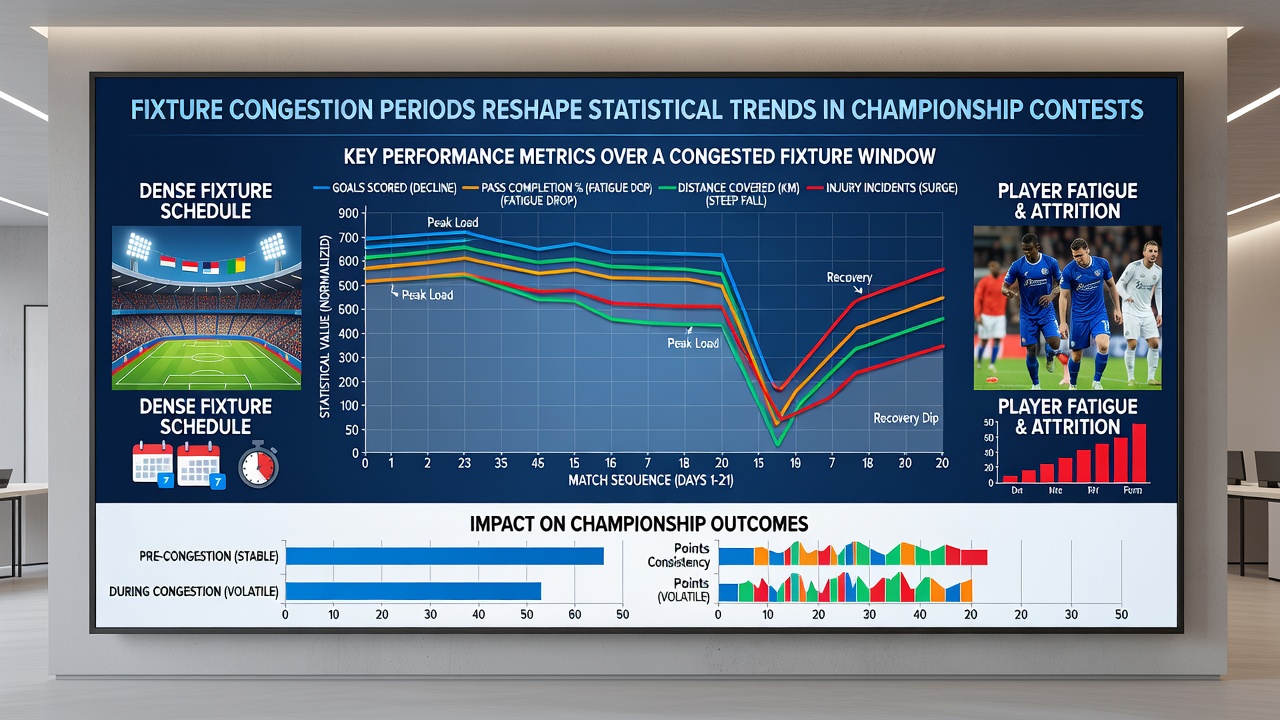
Travel demands compound during congestion, so away results in the Championship show distinct patterns when teams face back-to-back long journeys within short intervals. Records indicate that away win rates decline for clubs logging high mileage in December blocks, while home sides benefit from reduced travel and familiar conditions that help maintain pressing intensity longer into matches. Research from European football monitoring groups has tracked how points per game for away teams fall by roughly 0.3 on average in congested spells, with draws becoming more common as both sides conserve energy. What's interesting is that these trends appear more pronounced for teams in the lower half of the table, where squad depth limits rotation options and forces starters to play through accumulated fatigue.
Impact of Squad Rotation on Results
Coaching staffs that implement structured rotation during busy periods often preserve win rates better than those attempting to field near-identical lineups, according to data aggregated from Championship matches over five seasons. Teams rotating at least four positions between congested fixtures record higher expected points totals than those making minimal changes, because fresh legs sustain pressing and counter-pressing actions that define many second-tier contests. Analysts reviewing Opta-derived metrics note that possession retention in the middle third holds steadier for rotated sides, reducing turnovers that lead to opposition chances. Yet clubs with thinner squads sometimes cannot rotate without dropping quality, which leads to measurable dips in pass completion rates after the second match in a cluster. External data from sports performance institutes across different regions, including studies coordinated through the Aspetar Orthopaedic and Sports Medicine Hospital in Qatar and reports from the Australian Institute of Sport, supports the observation that structured recovery protocols combined with rotation help stabilise key performance indicators even when match density rises.
Long-Term Effects on League Table Positions
Over the course of a full Championship campaign, clubs that navigate congestion periods with minimal points loss tend to secure stronger final positions, as early or mid-season clusters can create separation that persists into spring. Statistical models built on historical data show that teams losing form during December blocks rarely recover enough ground to challenge for automatic promotion spots, whereas consistent results through those windows correlate with playoff qualification rates above league averages. Points accumulated per game drop by an average of 0.25 during the busiest months for most sides, and this margin proves decisive in tight promotion races where goal difference and head-to-head records also shift under fatigue pressure.
Conclusion
Fixture congestion continues to reshape multiple layers of Championship statistics, from injury rates and goal timing to home advantage margins and rotation effectiveness, with data across recent seasons confirming these measurable adjustments in performance trends. Clubs and analysts tracking these patterns rely on workload monitoring and historical benchmarks to anticipate shifts, while scheduling bodies consider such factors when planning future calendars including the August 2026 window. The evidence underscores how concentrated match schedules alter the statistical landscape of the division in predictable ways that reward preparation and depth.