Examining How Squad Depth Variations Affect Outcome Probabilities in Multi-Competition Soccer Schedules
Harper Günther · Aug 23, 2026
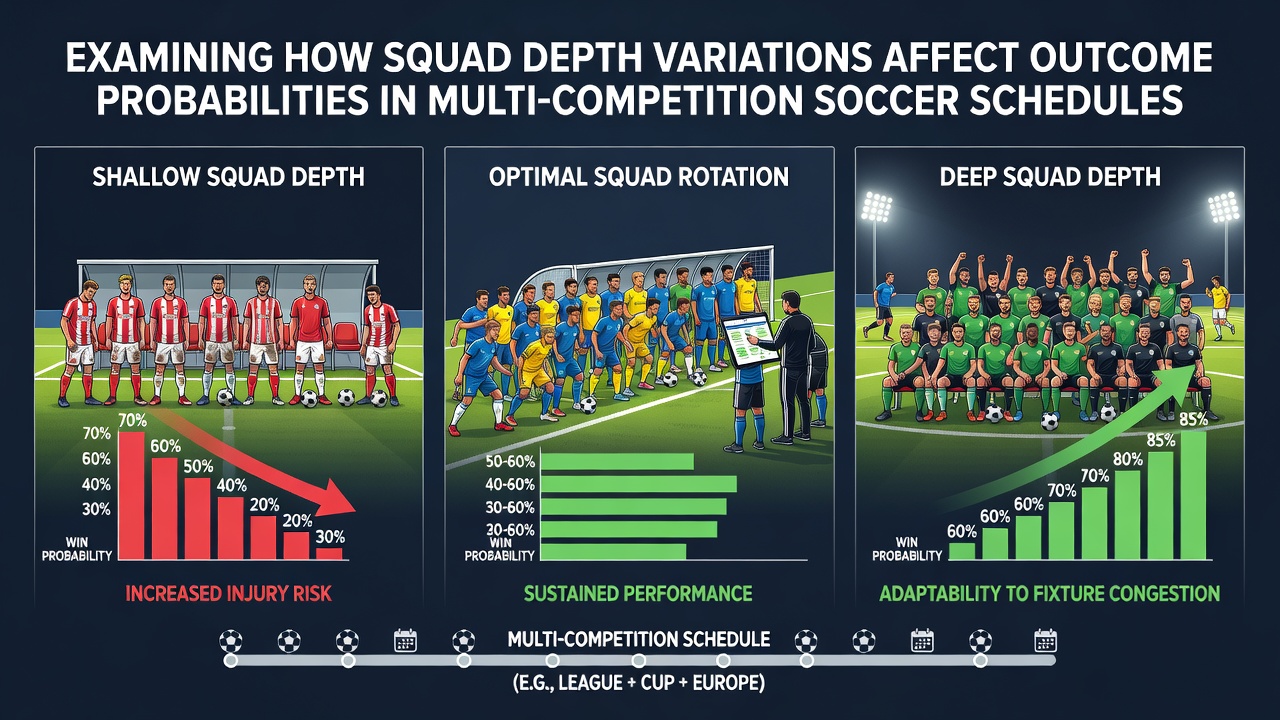
Examining How Squad Depth Variations Affect Outcome Probabilities in Multi-Competition Soccer Schedules
Multi-competition schedules place unique demands on soccer teams because clubs participate in domestic leagues alongside cup ties and continental tournaments at the same time, and squad depth becomes a measurable factor in determining match outcomes across those fixtures, according to performance data compiled over recent seasons.
Teams with larger groups of players who maintain similar output levels show different win probabilities compared to squads that rely on a narrower core group, and this pattern holds especially when matches occur within short time frames such as those common in August when new campaigns begin.
Defining Squad Depth in Context of Fixture Load
Squad depth refers to the number of players at each position who can deliver comparable statistical contributions in metrics like expected goals, pass completion, and defensive actions, and researchers have tracked how this resource influences results when clubs face two or three matches per week. Data from European domestic leagues indicate that clubs maintaining at least two reliable options per starting position record higher points-per-game averages during periods of elevated fixture density.
Observers note that variations appear most clearly in the second half of congested weeks, where rotation becomes necessary yet carries its own risk if replacement players lack equivalent experience in high-stakes environments.
Statistical Patterns Across Competitions
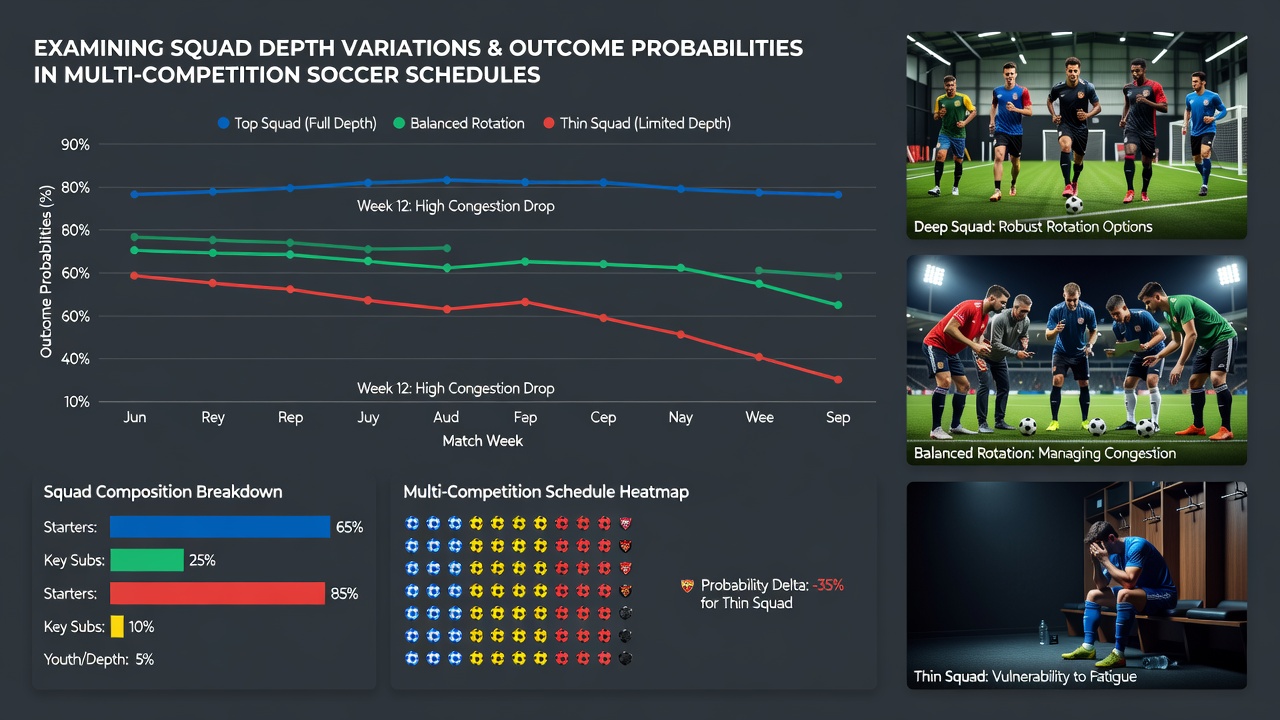
Analysis of match outcomes from the 2023-2025 period reveals that teams entering continental fixtures with limited bench options experience a measurable drop in win probability when they also contest domestic cup ties the following midweek. Figures from league-wide tracking systems show that squads with depth ratings in the top quartile maintain win rates above 55 percent in matches played within 72 hours of a prior fixture, whereas those in the bottom quartile fall below 40 percent under identical conditions.
What's interesting is how these probabilities shift when teams allocate resources across multiple fronts, because clubs that rotate systematically in earlier rounds preserve key performers for later stages yet still face variance when injuries accumulate.
Rotation Strategies and Their Measured Effects
Coaching staffs employ rotation matrices that factor in player workload data collected via GPS and heart-rate monitors, and studies compiled by sports science departments at several European universities demonstrate that teams rotating more than three players between consecutive matches retain higher outcome probabilities than those making minimal changes. The same research indicates that the effect compounds when the schedule includes travel across time zones or when matches occur on different pitch surfaces.
One documented case involved a club competing simultaneously in a national league, domestic cup, and group stage of a continental tournament during the 2024-2025 campaign, where systematic rotation correlated with sustained league position despite the added fixtures.
August 2026 Schedule Implications
With the 2026-2027 season scheduled to commence in mid-August across major European leagues, fixture planners have already released preliminary calendars that include overlapping domestic and European commitments in the opening six weeks, and analysts expect squad depth metrics to influence early-season standings more visibly than in prior years. Pre-season testing data released by several clubs indicate they have expanded their registered player pools specifically to address these overlapping demands.
Evidence from similar August periods in previous cycles shows that teams entering the new campaign with at least 20 players averaging above 75 minutes per appearance in the prior season achieve higher points totals in the first 10 league matches compared with shallower squads.
External Factors Modifying Depth Effectiveness
Injuries, suspensions, and international call-ups further modulate the impact of squad depth because even well-stocked teams encounter periods when multiple first-choice players become unavailable simultaneously. Records maintained by league medical departments reveal that the probability of concurrent absences rises sharply during December and March blocks, yet the same data sets show that clubs with deeper options experience smaller drops in expected points during those windows.
According to performance reports published by the International Journal of Sports Physiology and Performance, teams that integrate youth academy graduates into senior rotation plans during these stretches record improved long-term outcome probabilities across all competitions.
Conclusion
Available performance datasets demonstrate that squad depth variations produce measurable differences in outcome probabilities when clubs navigate schedules spanning league matches, cup competitions, and continental ties, with the effect becoming most pronounced during periods of elevated fixture frequency such as the opening weeks of August. Teams that maintain broader pools of comparable contributors sustain higher win rates across multiple fronts, while those with narrower options encounter steeper declines once rotation or absences occur. Continued tracking through upcoming seasons will clarify whether these patterns remain consistent under evolving calendar structures.