Decoding Referee Assignment Histories and Their Effects on Goal Expectancy Models in Cup Tie Formats
Cameron Griffin · Aug 29, 2026
Decoding Referee Assignment Histories and Their Effects on Goal Expectancy Models in Cup Tie Formats
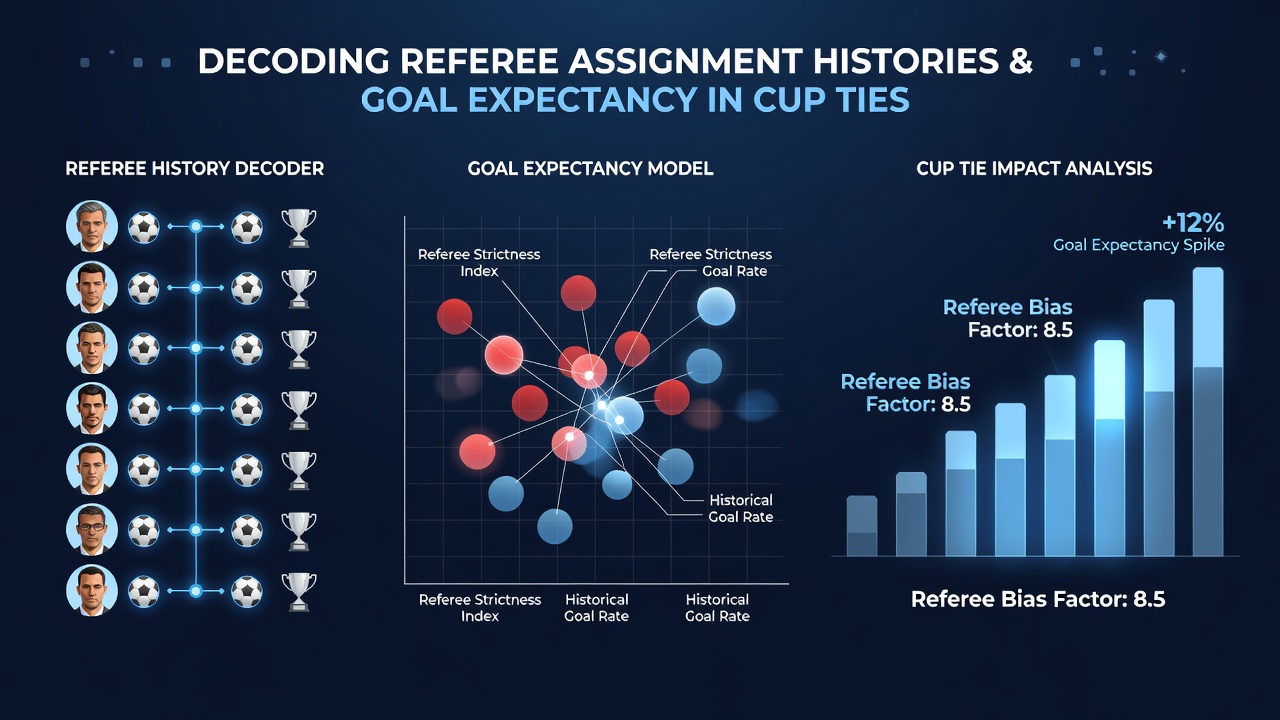
Referee assignment histories in cup competitions reveal consistent patterns that influence goal expectancy calculations across knockout stages, where single-match outcomes carry elevated stakes compared to league formats. Researchers track these assignments through official federation databases, noting that experienced officials often receive allocations in later rounds while less experienced referees handle earlier ties. Data from multiple seasons demonstrates how these histories correlate with variations in penalty awards, card distributions, and time added on, which in turn adjust expected goal projections in statistical models.
Patterns in Referee Selection for Cup Ties
Cup tie formats introduce variables absent from round-robin schedules, and assignment committees prioritize officials based on prior performance metrics that include disciplinary consistency and match control. Studies compiled by international governing bodies show that referees with histories of stricter card issuance appear more frequently in high-profile ties, leading to measurable shifts in player behavior and subsequent goal opportunities. Those who have examined assignment logs from recent tournaments observe that neutral venue matches often pair with officials drawn from third-party confederations, which adds another layer to expectancy adjustments.
Integration of Historical Data into Goal Models
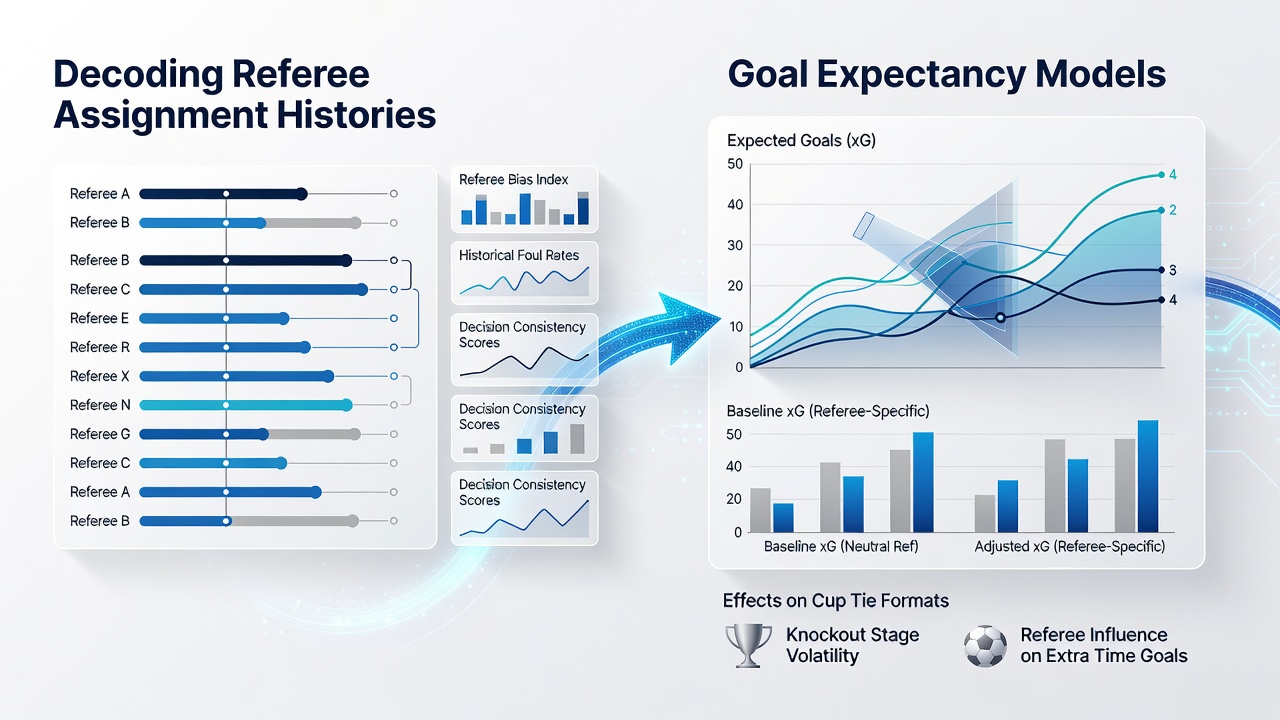
Goal expectancy frameworks incorporate referee-specific coefficients derived from historical records, where variables such as average goals per game under a given official receive weighted emphasis in knockout scenarios. Evidence from analysis of European and South American cup competitions indicates that certain referees correlate with elevated stoppage time, which extends periods for potential scoring sequences. Models update these inputs dynamically as assignment announcements occur, allowing projections to reflect the particular official rostered for each tie. Figures released by the Confederation of North, Central America and Caribbean Association Football highlight how referee history data refined projections during recent regional tournaments.
Effects Observed in Knockout Stages
In two-legged cup ties, referee rotation between legs creates distinct expectancy profiles because the second official brings a separate set of tendencies that teams and analysts must factor into revised calculations. Data indicates that when a referee with a lower foul threshold handles the return leg, goal expectancy can increase due to fewer interruptions and sustained attacking play. Observers note that single-elimination formats amplify these effects since one decision carries decisive weight, prompting model builders to apply higher variance parameters when referee histories show divergent disciplinary records. As of August 2026, updated datasets from major confederations continue to feed these refinements.
Adjustments and Validation Techniques
Analysts validate referee-adjusted models against actual outcomes from completed cup ties, comparing predicted goal distributions with observed results to calibrate coefficients further. Research published through academic channels, including work from institutions tracking global sports performance, confirms that incorporating assignment history reduces error margins in expectancy estimates, particularly during extra-time periods where fatigue and accumulated cards alter dynamics. Those who have reviewed these validations report that models perform more reliably when referee data spans at least five seasons, capturing rare events such as multiple penalty awards in single matches.
Regional Variations and Data Sources
Assignment practices differ across confederations, with some prioritizing geographic neutrality while others emphasize experience in specific competition types. Reports from the Asian Football Confederation document how regional referee pools influence goal expectancy baselines in their cup events, whereas data from the Oceania Football Confederation illustrates smaller sample effects that require careful statistical handling. These geographic distinctions feed into global models that blend multiple sources to produce unified projections for international ties.
Conclusion
Referee assignment histories supply measurable inputs that refine goal expectancy models in cup tie formats through documented correlations with disciplinary actions and match duration. Ongoing data collection from diverse confederations supports continued calibration, ensuring projections remain aligned with evolving assignment practices observed through August 2026 and beyond. Researchers continue to integrate these histories as new ties unfold, maintaining the accuracy of statistical frameworks used across professional analysis.